Scott L. Williams doesn’t pin himself down with a single label. Ask who he is as an artist, and you’ll get an answer that feels like his work: honest, evolving, and a little bit in motion. “It’s a tough question,” he admits, then describes a practice that moves between painting, drawing, mixed media, collage, occasional photography, and even performance work that began in his college days. More than a neat category, Scott’s art is a living ecosystem—built from intuition, memory, music, and a desire to keep experimenting.
A Childhood of Sketchbooks and Pokémon
Scott’s relationship with art started the way it does for many artists: pure, instinctive play. He drew constantly—stick figures, cartoon characters, animals, dinosaurs for a period of time, and especially Pokémon. He worked from official illustrations with pencils and markers, sometimes drawing for classmates at school. He laughs remembering how that impulse could get him in trouble: instead of focusing on math, he’d fill scraps of paper and notebooks (and even textbooks) with sketches.
His interest in art ebbed and flowed through middle school and high school, often returning when a class prompt sparked something—or when boredom led him back to doodling. After high school, Scott describes his path as anything but linear. He “meandered” in college, unsure of direction, until a turning point in 2019 reshaped how he saw his life and his work.
The Moment Everything Changed
In 2019, a writing assignment led Scott to an event at Calvin Hall Auditorium where he witnessed an art performance by fellow student Cobin Willie. The piece—centered on the stark phrase “Kill suicide with art” (and its inversion)—hit him with a kind of clarity that left him shaken. He describes it as the moment the “floor shattered beneath” him, undoing what he thought was solid, forcing him to rebuild.
What remained was art: not a hobby, but a way to make sense of living.
Scott connects that shift to a belief he heard from singer-songwriter Alexz Johnson—the idea that art can be the most authentic thing a person has to offer. For him, making work became a
way to sit with emotions, communicate when words tangled or failed him, and reclaim ownership of his story instead of living inside other people’s expectations. Or, making reference to the song “What It Sounds Like”: finding peace with the imperfections.
A Melting Pot of Influences
Scott’s inspiration comes from everywhere. Pop culture. A word or phrase. An emotion. Music. The look of an animal. An art style he wants to try. Artists he admires also play a major role—like Tahlia Stanton in Melbourne, whose abstract faceless figures and expressive color palettes push him toward bolder composition; Joshua Mizusawa in Albuquerque, whose work blends culture and discipline into striking visuals; Ten Hundred (Peter Robinson) and other creators he follows online who build entire worlds through character illustration and fearless experimentation.
Closer to home, Scott credits his sister Cherille as both inspiration and support, along with a wide circle of Albuquerque and Gallup area artists: Dana Aldis, Jerry Brown, Andera Sparks, Natalya Nez, Lady Jenn, and Be Sargent, to name a few, all of whom range across different mediums like oils, acrylics, pen, pencil, jewelry, and digital media, reinforcing his belief that he doesn’t have to stay in one lane.
S. Williams Artwork (3)
S. Williams Artwork (7)
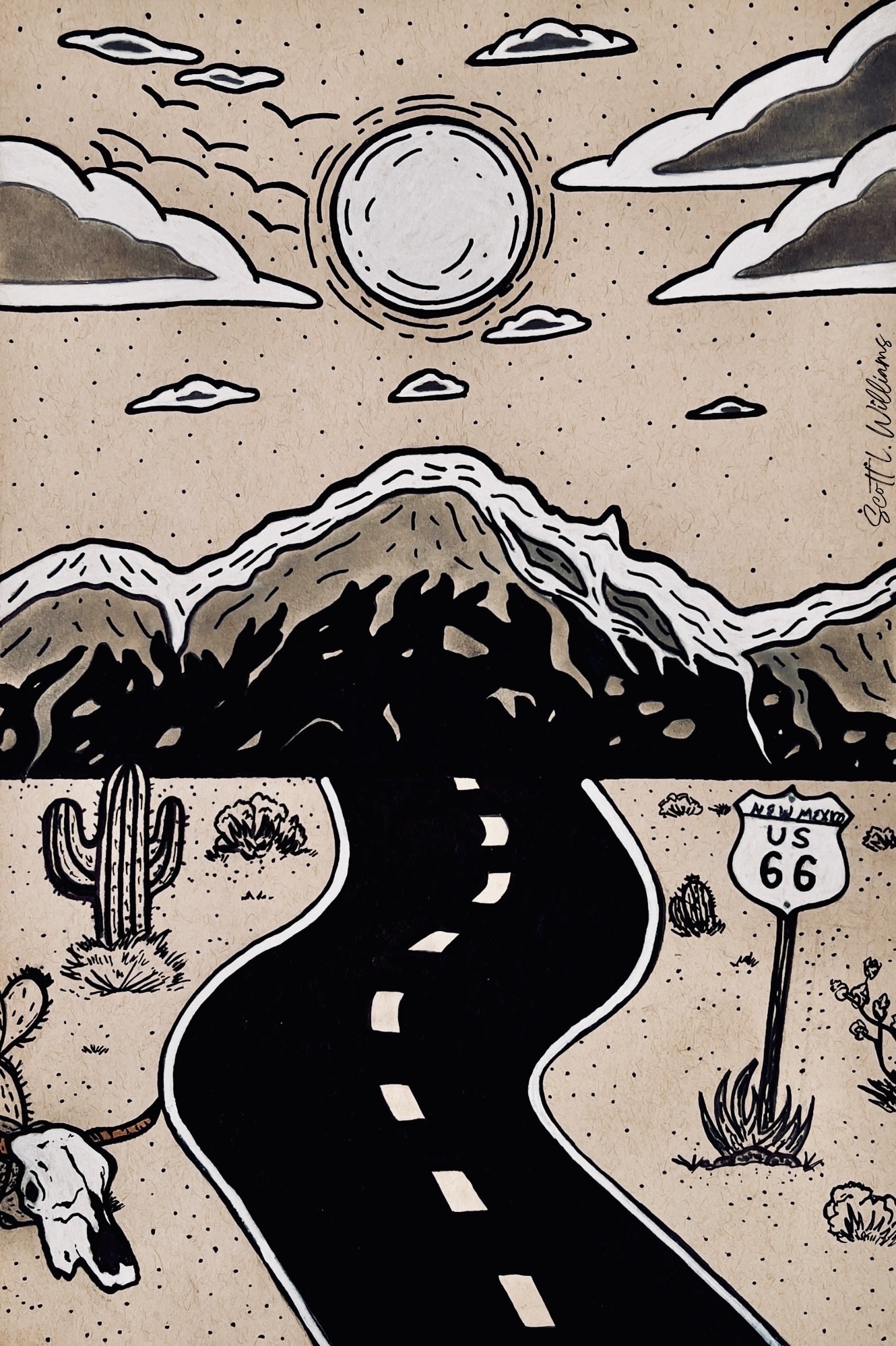
S. Williams Artwork (8)
Materials: From Oil Paint to Cyanotype Dreams
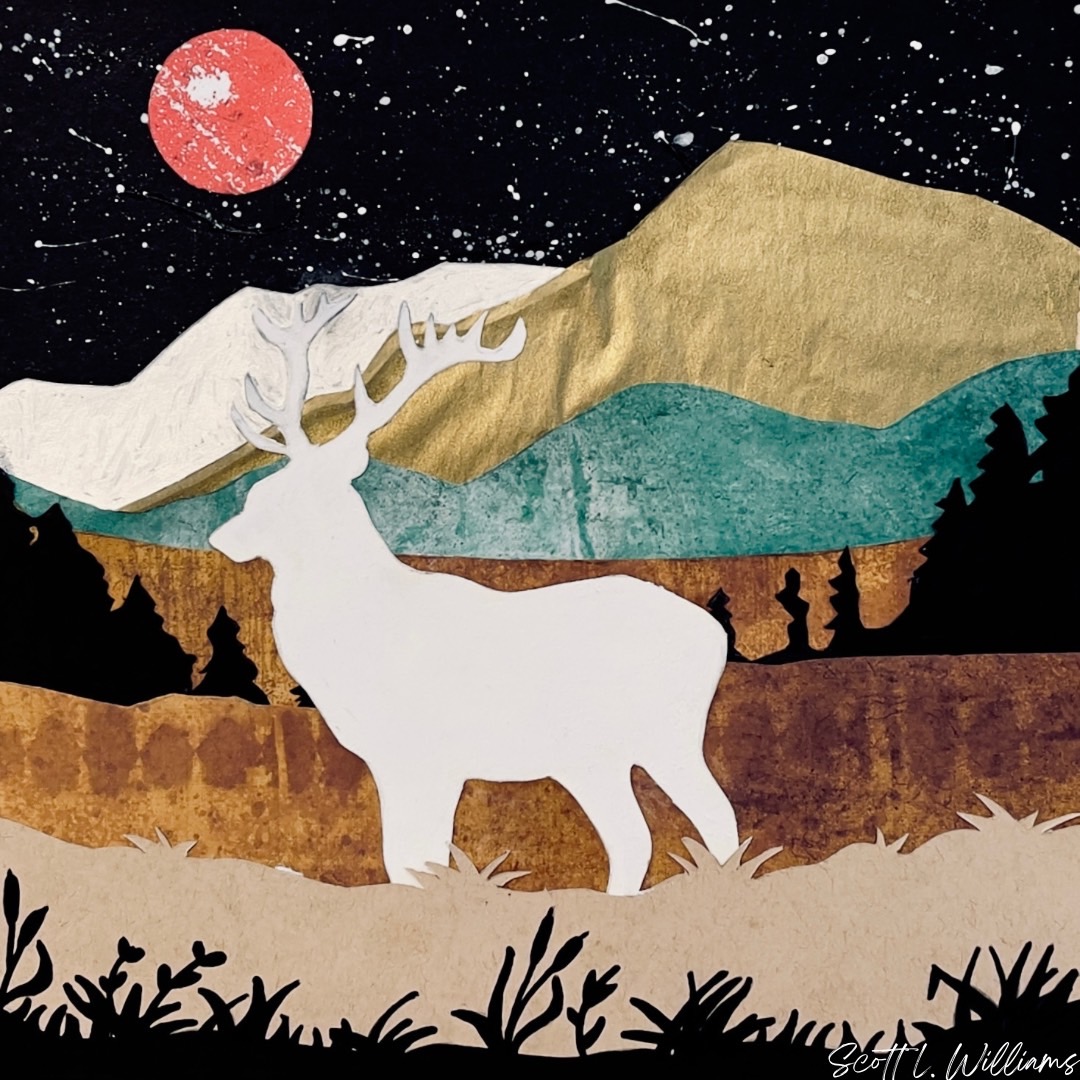
While Scott often returns to oil paint, his toolkit is deliberately expansive: pencil, pen, marker, acrylic markers, acrylic paint, spray paint, and pastels. Recently, he’s been exploring collage and developing an interest in cyanotype printing and printmaking (including block printing). He’s also drawn to tactile, textured approaches—work that physically rises off the surface—taking cues from artists known for building dimension into their pieces.
If there’s a theme here, it’s freedom. Scott isn’t interested in becoming static. He’d rather try everything, learn from what fails, and carry forward what works.
Process: The Spark, the Music, the Release
Scott’s process begins with a spark—an idea or feeling that may not be fully formed. He doesn’t always know what the piece will become. He reaches for materials that “feel right” in the moment, then manages the part that often threatens to stop him: overthinking.
Music is his way through. It helps him drop into a flow state, loosening what he describes as a pressure valve in his head so the work can move. Sometimes the goal is to have fun, to be loud and unrestrained, to let the art be messy before it becomes meaningful.
“Redefine the Future”: When the Block Broke
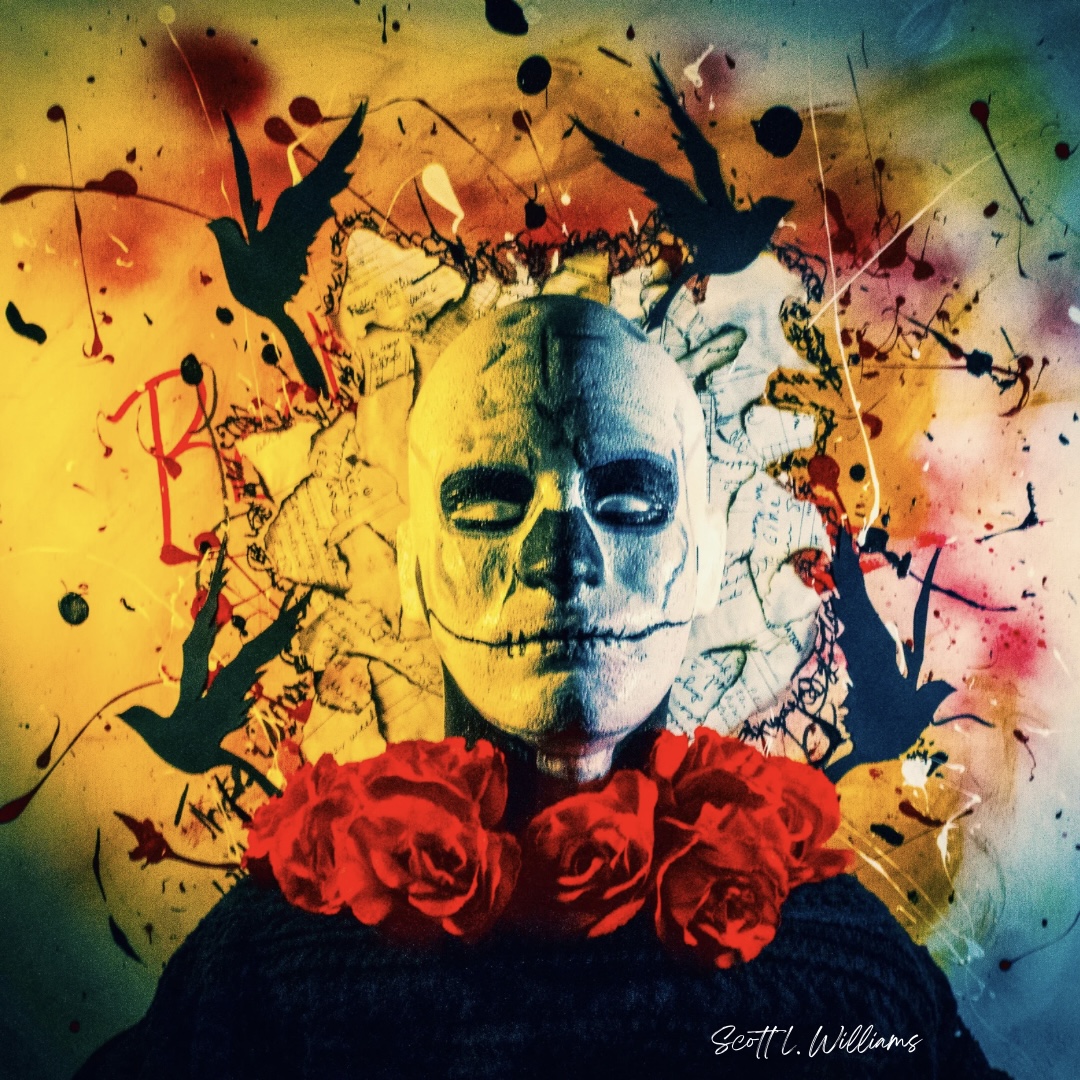
One of Scott’s most significant creations and personal works, "Redefine the Future," began as an endeavor to craft imagery for his cards. The simple image idea grew into a powerful act of release, evolving into something much larger—literally, a 24x24 canvas—emerging during a particularly challenging time. Confronted with intense artistic block, he turned up the energizing sounds of “Drop Dead” by grandson, featuring Travis Barker and Kesha, and dipped a brush into thinned acrylic and let the paint fall freely, splashing with no preconceived plan for where it would land.
Embracing chaos over control, “I found myself laughing,” Scott recalls, taken aback by the liberation it brought. This spontaneity—embracing the chaos—brought him joy, letting him exhale and keep pushing forward.
He smeared oil paint directly from the tube and from there, the piece became a ritual of reclamation. From an old binder, Scott integrated ripped bits of prescription paper, which were tied to painful memories. He burned the edges and wove them in to create a dramatic, torn effect, as though the canvas were bursting open. Birds emerged within the composition as symbols of hope and freedom. The roses and skulls echoed themes of death and rebirth, signifying not just an end but the dawn of something new. Scott credits Tracy Lassiter for helping him burn the documents and create a powerful piece with her support.
The piece ended up signifying not just an end but a profound transformation: shedding the old self and emerging anew. Captured with Cherille's help, the finished artwork embodied a duality of warm and cool lighting that Scott interpreted as a balance—a “middle ground” that felt just right, neither overwhelming nor sparse, simply authentic.
Pieces That Carry Memory
Scott lights up when he talks about specific works that stand out—not because they’re perfect, but because they hold weight.
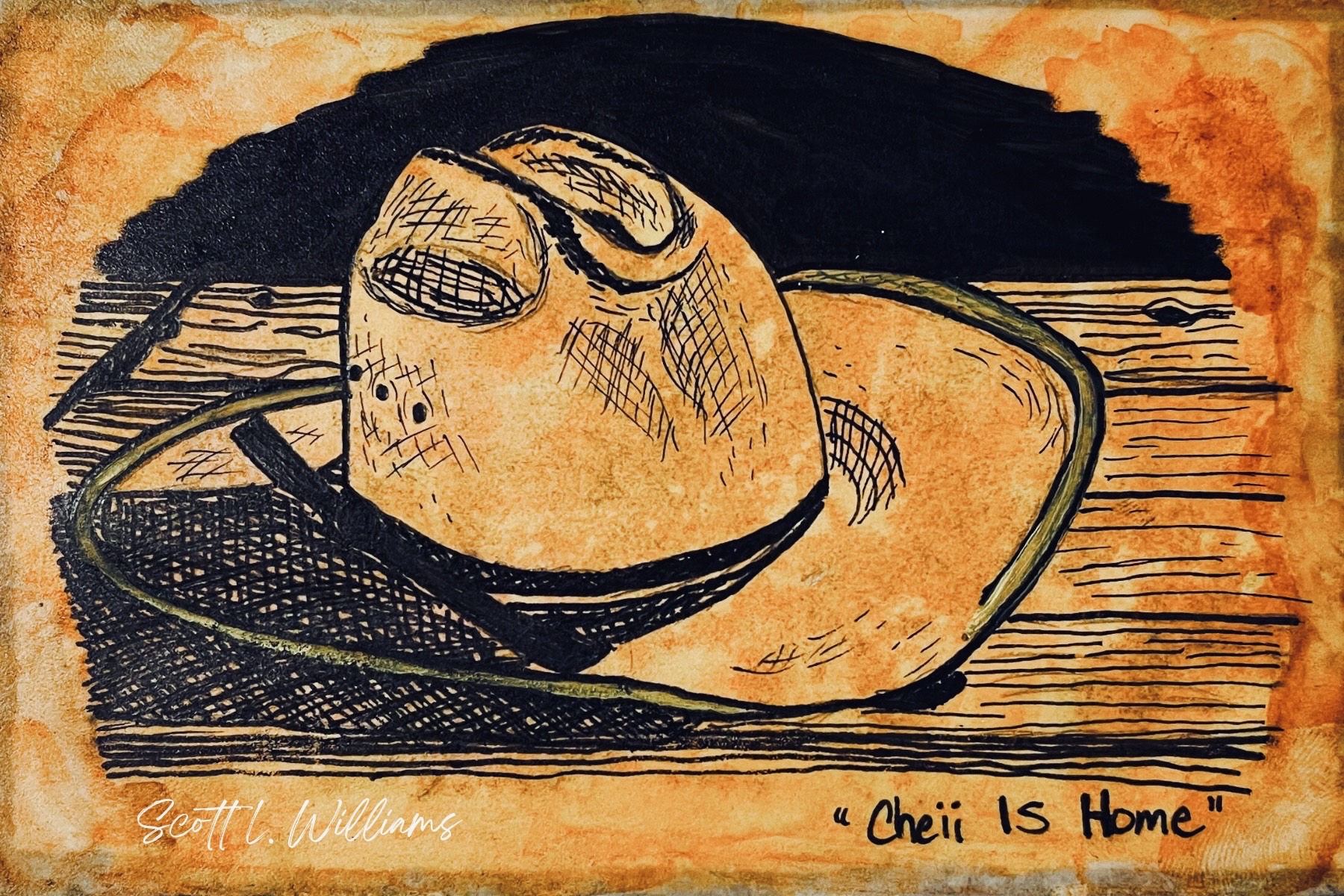
One piece titled "Cheii is Home," was created for the ART123 annual artist challenge, inspired by Roanna Shebala’s poem. Scott crafted this artwork around the anniversary of his grandfather’s passing—who was, in many ways, a father figure. The piece stands as a heartfelt tribute: a cowboy hat illustrated in a vintage style sits against a parchment-like background, with the poem’s poignant final line grounding its emotional depth.
Scott intertwined the poem's tenderness with his own sorrow, using the cowboy hat as a nod to the grandparents, Albert and Francine Williams, who raised him and whom he cherishes not just as grandparents, but as parents. Yet the artwork carried such emotional resonance that its impact stretched far beyond Scott’s personal grief; it struck a chord with viewers and fellow artists alike, one of whom later shared that Williams’ reflections had a profound effect on her husband. In the end, Roanna Shebala’s interest in the collection prompted her to purchase several pieces, further highlighting its significance.
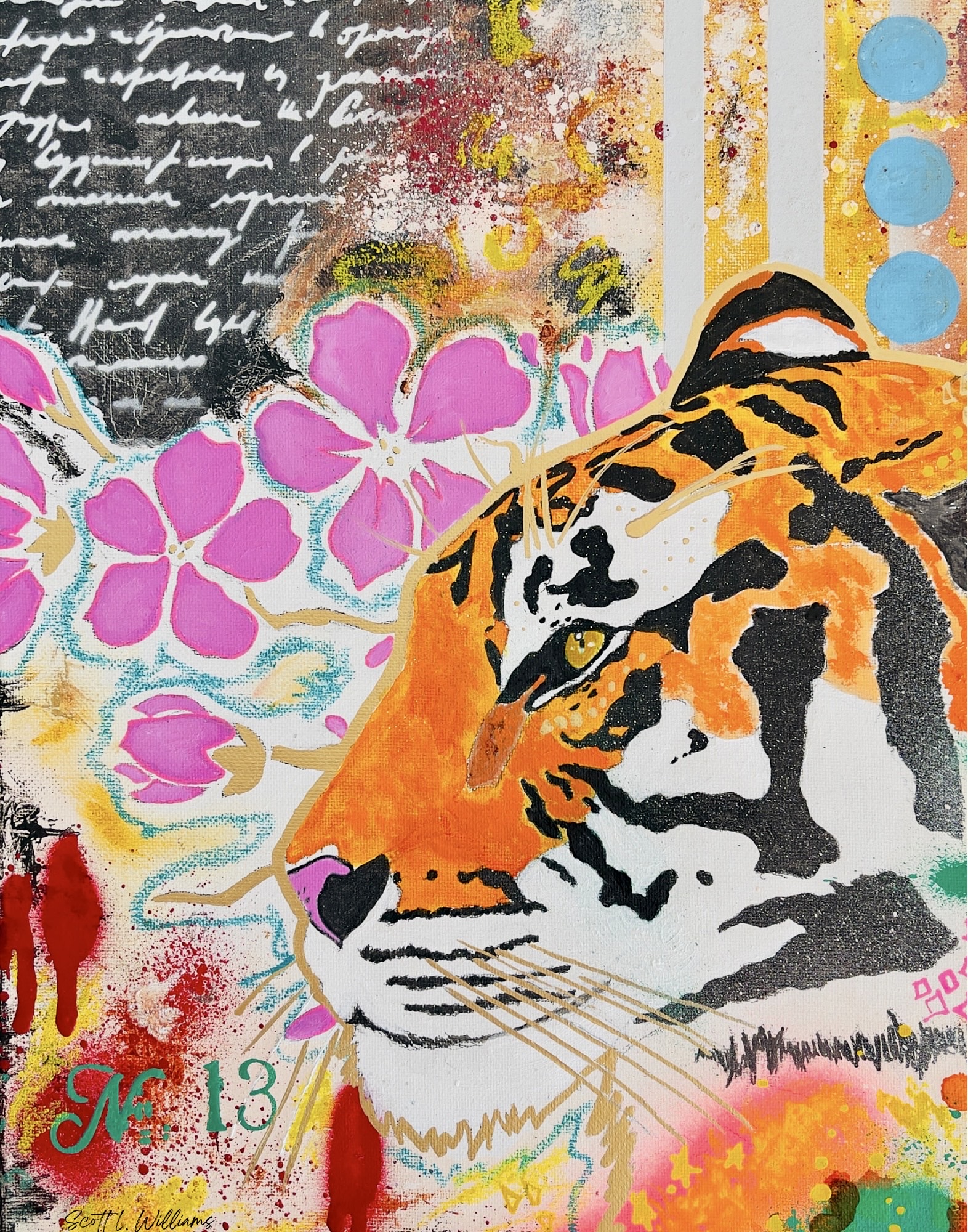
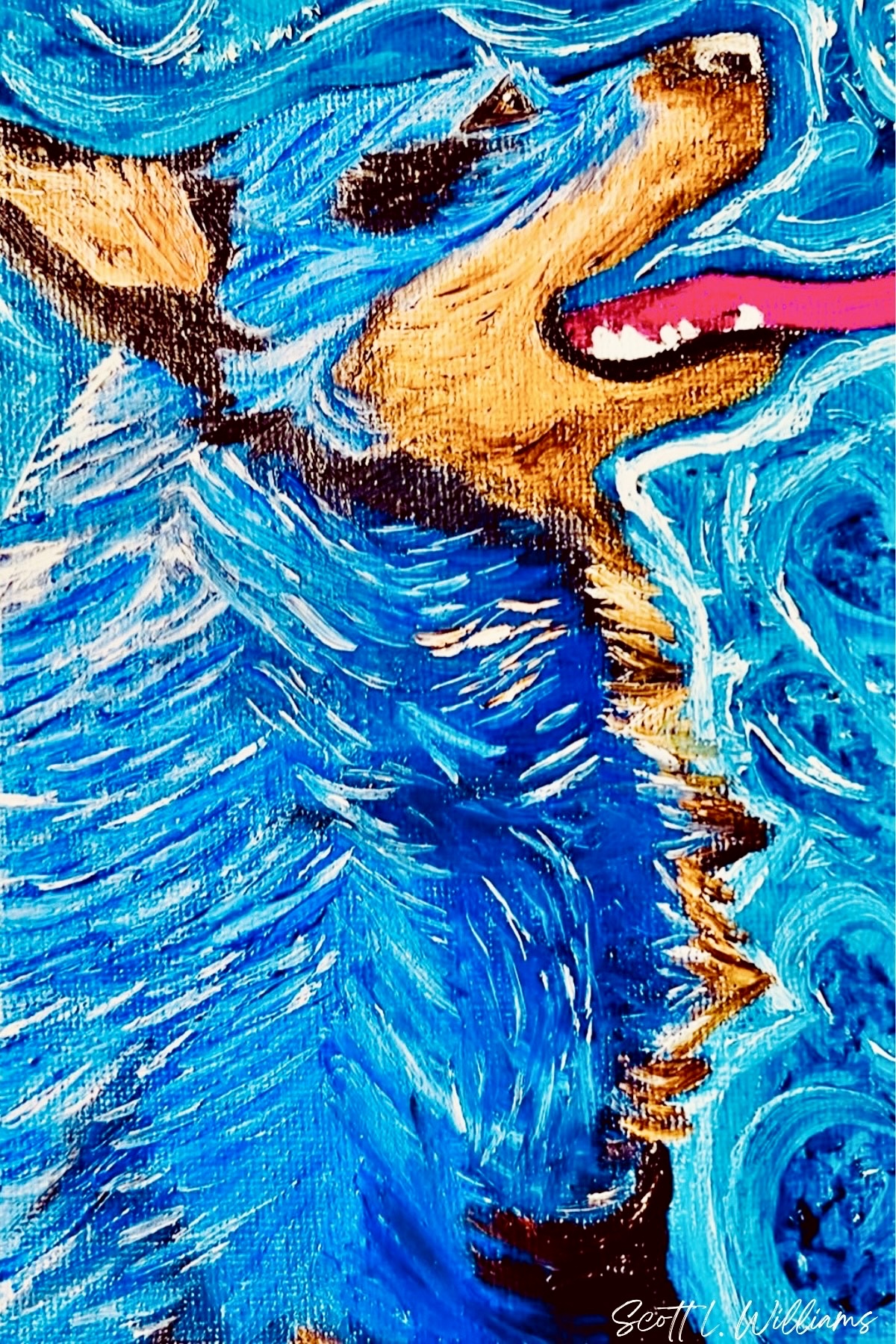
Other works include an oil portrait tribute to a blue heeler named Kingo, which sold, and “Wild at Heart”, a tiger piece built from layered materials—spray paint, oil pastels, acrylic markers, ink—where Scott explored “embracing the chaos.” He wove in the fleeting nature of cherry blossoms as a metaphor for creativity: fragile, beautiful, and easy to lose if not cared for.
In "Lady Sun," Scott skillfully embraces blending media techniques and diverse cultural storytelling traditions. The piece features a celestial figure, ingeniously endowed with human characteristics, with the face inspired by the vibrant essence of Cherille. Scott's intention was to channel her fiery presence, capturing the dynamic energy she embodies. Interestingly, a surprising influence played a pivotal role in unlocking the series' creative potential: the song "What Else Can I Do?" from Disney's Encanto. This track encouraged him to step outside traditional artistic expectations and follow his curiosity, letting the creative process unfold organically.
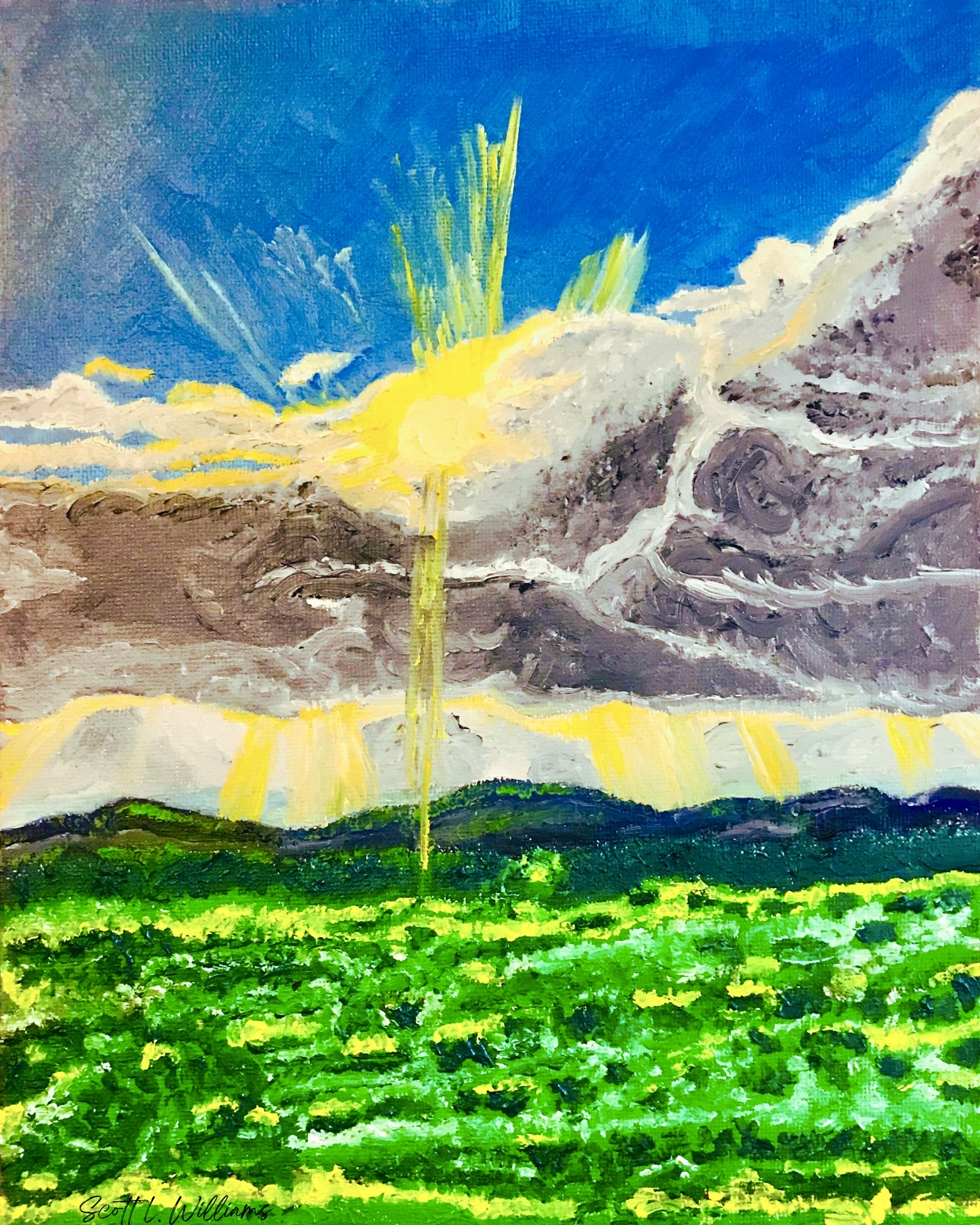
Beyond "Lady Sun," Scott's body of work reflects a wide range of subjects and emotional narratives. The blue heeler tribute celebrates the unique spirit of this energetic breed. Similarly, "Wild at Heart," captures the untamed essence of a tiger, drawing viewers into its raw vibrancy. Scott also produced "After the Storm," a landscape-like composition inspired by ZZ Ward’s poignant song “The Storm.” This piece encapsulates the profound sense of relief and renewal that often follows a personal crisis, inviting viewers to reflect on their own experiences of overcoming adversity. Through these works, Scott reveals his deep connection to his subjects and his ability to convey complex emotions through his art.
Advice to Young Artists: Be Kind, Then Be Brave
When asked about advice for young or emerging artists, Williams is simple yet profound with a call for self-compassion: be gentle with yourself. Not everything you produce will be a masterpiece, and that’s perfectly acceptable; pursuing perfection can hinder the very essence of artistic expression, stifling creativity before it even has the chance to bloom. Art evolves as you do—those initial efforts are not failures; they represent your journey of learning and growth.
Just as vital is the courage to share your work. Take that leap and put yourself out there. You never know who might resonate with what you’ve created or how far that connection might extend. For Scott, embracing this challenge opened doors to community, new friendships, and experiences he never thought possible until he took that crucial step.
He encourages artists to silence criticism—both internal and external—and grant themselves the freedom to evolve. His message is clear: “Don’t shy away from sharing your work.” You may discover connections you never anticipated.
This concept—viewing art as a genuine form of communication—recurs in Williams’ discussions about his craft. He finds inspiration in a quote by singer-songwriter Alexz Johnson, who describes art as “the most honest thing” she has to share, a sentiment he deeply connects with. For him, art isn’t about perfection or conforming to anyone else’s expectations; it empowers him to own his story.
Gratitude, Roots, and the People Who Held Him Up
Scott was raised by his grandparents, Francine C. and Albert L. Williams, whom he holds in the highest regard, viewing them not merely as relatives but as true parental figures who shaped his upbringing. From an early age, he grew up in an environment rich with love and support, evident in his artistic expressions. His grandfather, Albert, had an undeniable passion for horses, which subtly permeates Scott’s artwork. Each horse he depicts is not just a subject but a heartfelt tribute, symbolizing the deep bond and memories he shares with his grandfather. These paintings serve as a powerful reminder of the values and interests that were instilled in him during his formative years.
Scott's grandmother, Francine, stands out as one of his most unwavering supporters, always encouraging his creative endeavors. He fondly recalls a particularly cherished moment when she fully embraced the delightful chaos of his artistic process. On one occasion, she even accepted the splashes of paint that adorned the walls of their home as a testament to his creativity, understanding that these marks signified his passion and commitment to his craft. This acceptance not only fostered his growth as an artist but also gave him the confidence to explore and express his vision freely.
Beyond his grandparents, Scott acknowledges the importance of a broader network of mentors and collaborators who have shaped his journey. These include Dr. Tracy Lassiter, Dr. Shirley Heying, Ellen Babcock, Dana Aldis, Mariea Hall, Rose Eason, Virginia Primozic, Rachel Brown, Alizay Chavez, Donald Tamminga, and Cobin Willie, to name just a few, because the list is long. He particularly highlights the invaluable contributions of professors, fellow artists, and organizers in ART123's vibrant community. This organization plays a crucial role in providing spaces where emerging artists can step forward, experiment with new ideas, and flourish in their creative pursuits. Through these connections, Scott has found inspiration and guidance, allowing him to navigate the complexities of the art world with greater ease and confidence.
Where to Find Him
For now, Scott points people to Instagram, where he shares work and updates while he explores building a more permanent online home for his art. You can also find his work at ART123 Gallery on his membership wall space.
If his story has a thesis, it’s this: art doesn’t require perfection. It only asks you to be honest—and to keep going.
Instagram: @slwilliamsart
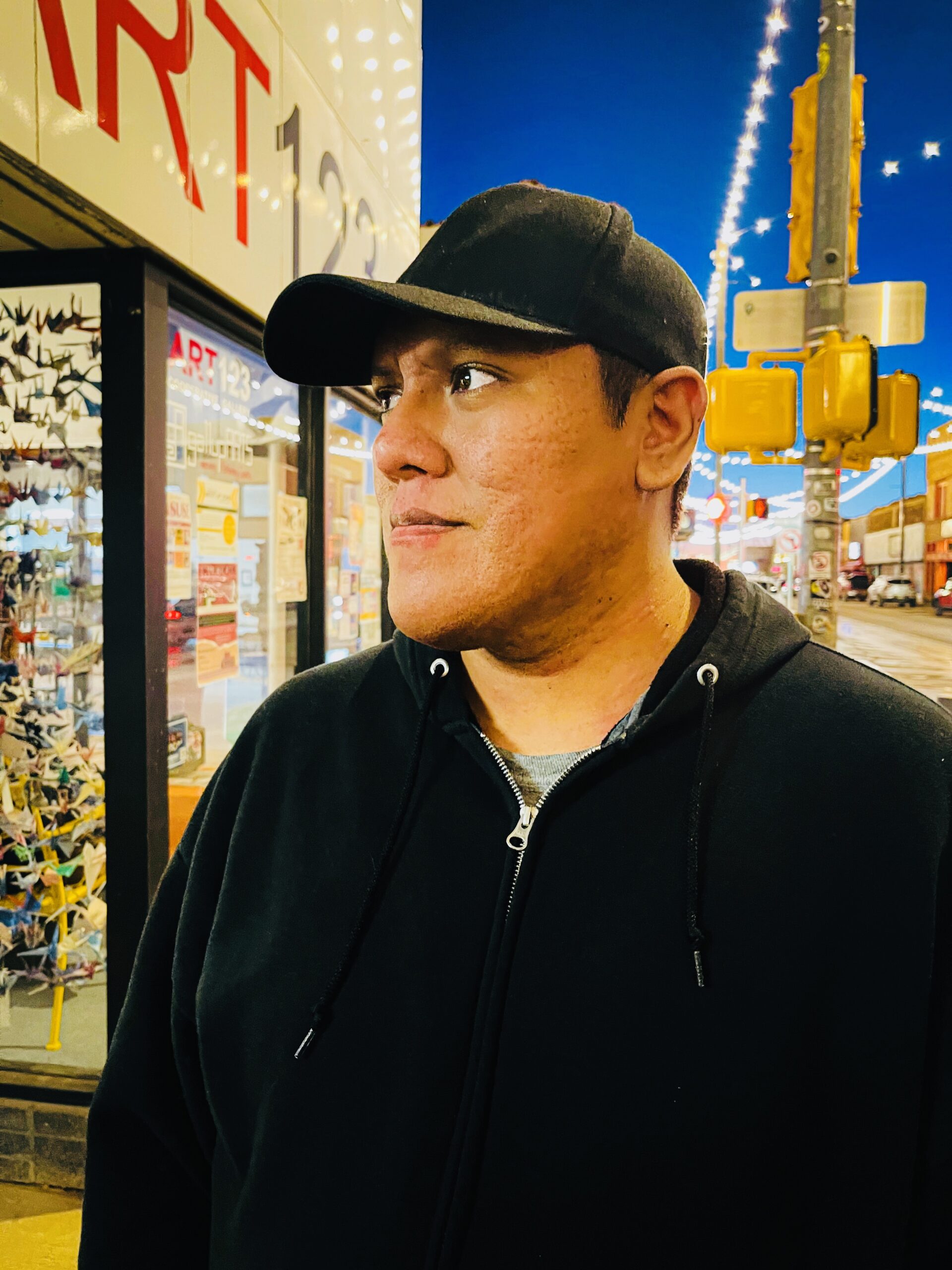
S. Williams Artist Photo
S. Williams Artwork (1)
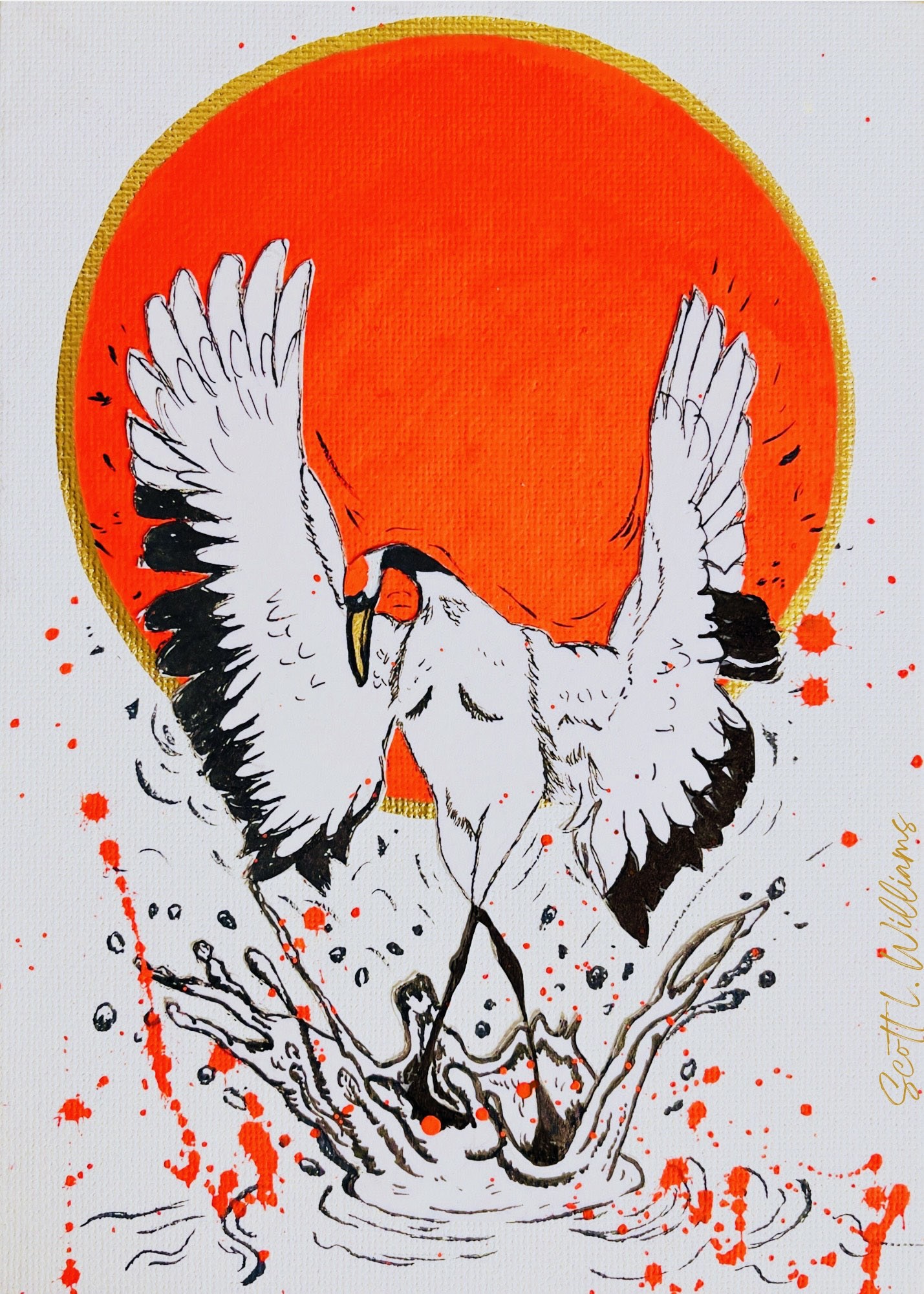
S. Williams Artwork (2)
S. Williams Artwork (4)
S. Williams Artwork (5)